What Is Biophilic Design? How Bringing Nature Indoors Improves Mental Health and Reduces Stress

What's remarkable is how consistent this response is — across cultures, generations, and geographies. The answer lies in our biology.
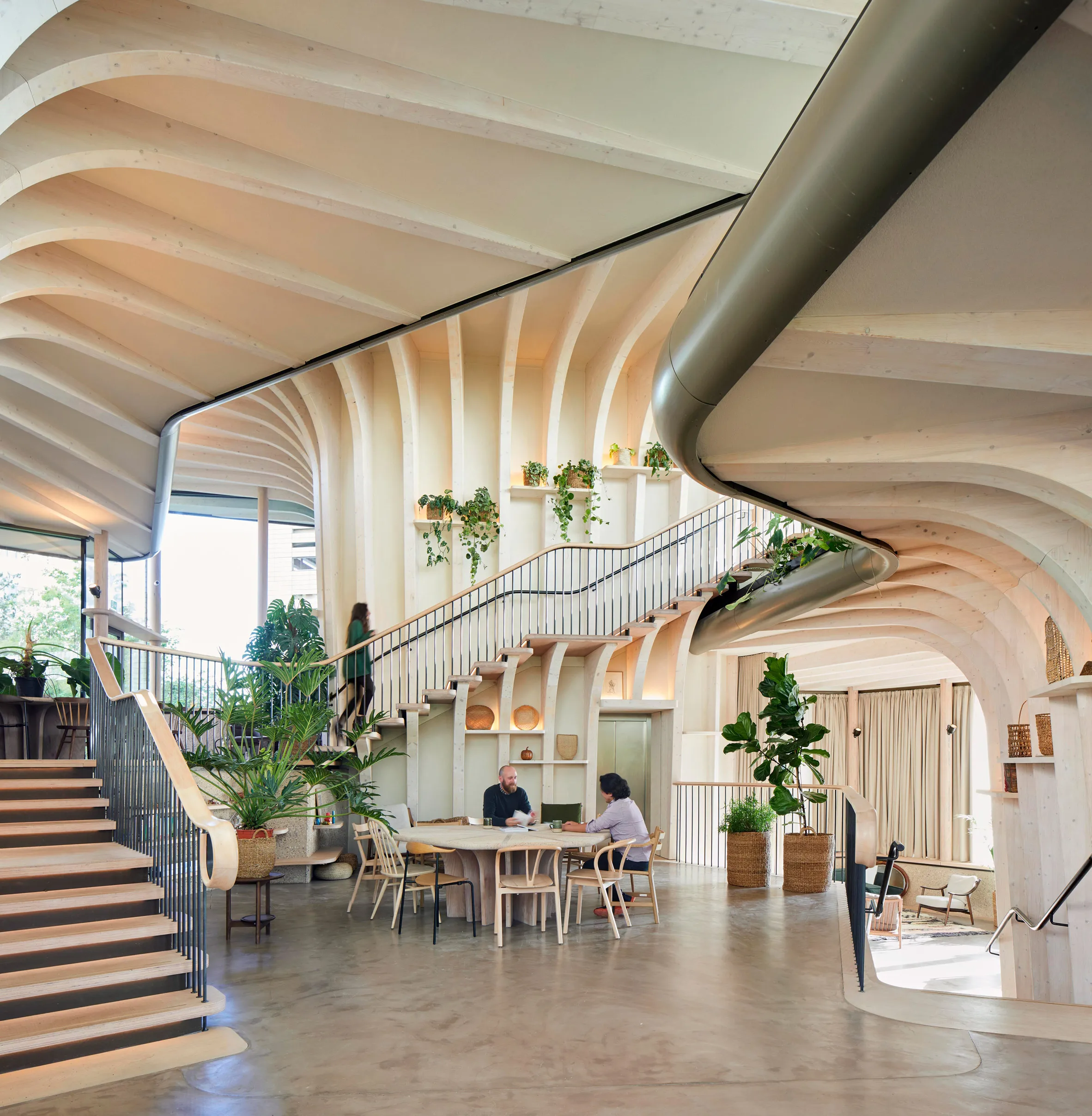
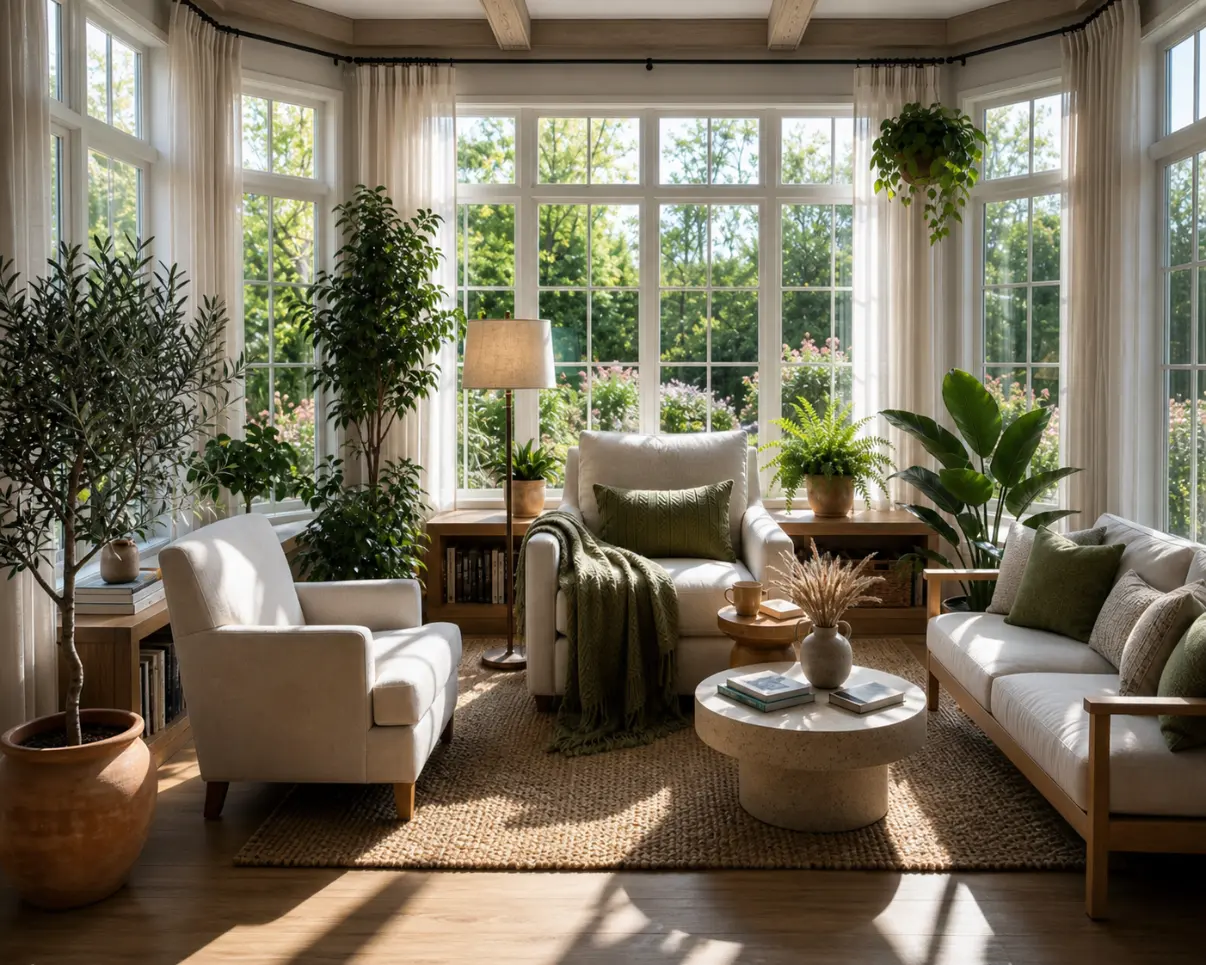
What is biophilic design? Biophilic design is an approach to architecture and interior design that integrates natural elements — plants, natural light, natural materials, water features, outdoor views, and organic forms — into built environments to support human health, wellbeing, and performance. The term biophilia, meaning "love of life or living systems," was coined by biologist E.O. Wilson in his 1984 book Biophilia, in which he proposed that humans have an innate, genetically encoded affinity for nature shaped by millions of years of evolutionary history. Biophilic design translates this deep biological connection into spatial practice.
See how Soma Atelier incorporates biophilic design principles
"Nature is not a luxury. It is a resource. Biophilic design helps us bring some of those benefits back into modern life."
Why Does Nature Make Us Feel Better? The Science Behind It
When we enter a natural setting, something measurable changes. Heart rates slow. Muscle tension decreases. Cortisol levels drop. Mental fatigue begins to fade. These are not subjective impressions — they are physiological responses documented across multiple decades of environmental psychology research, including Roger Ulrich's foundational Stress Recovery Theory and Rachel and Stephen Kaplan's Attention Restoration Theory.
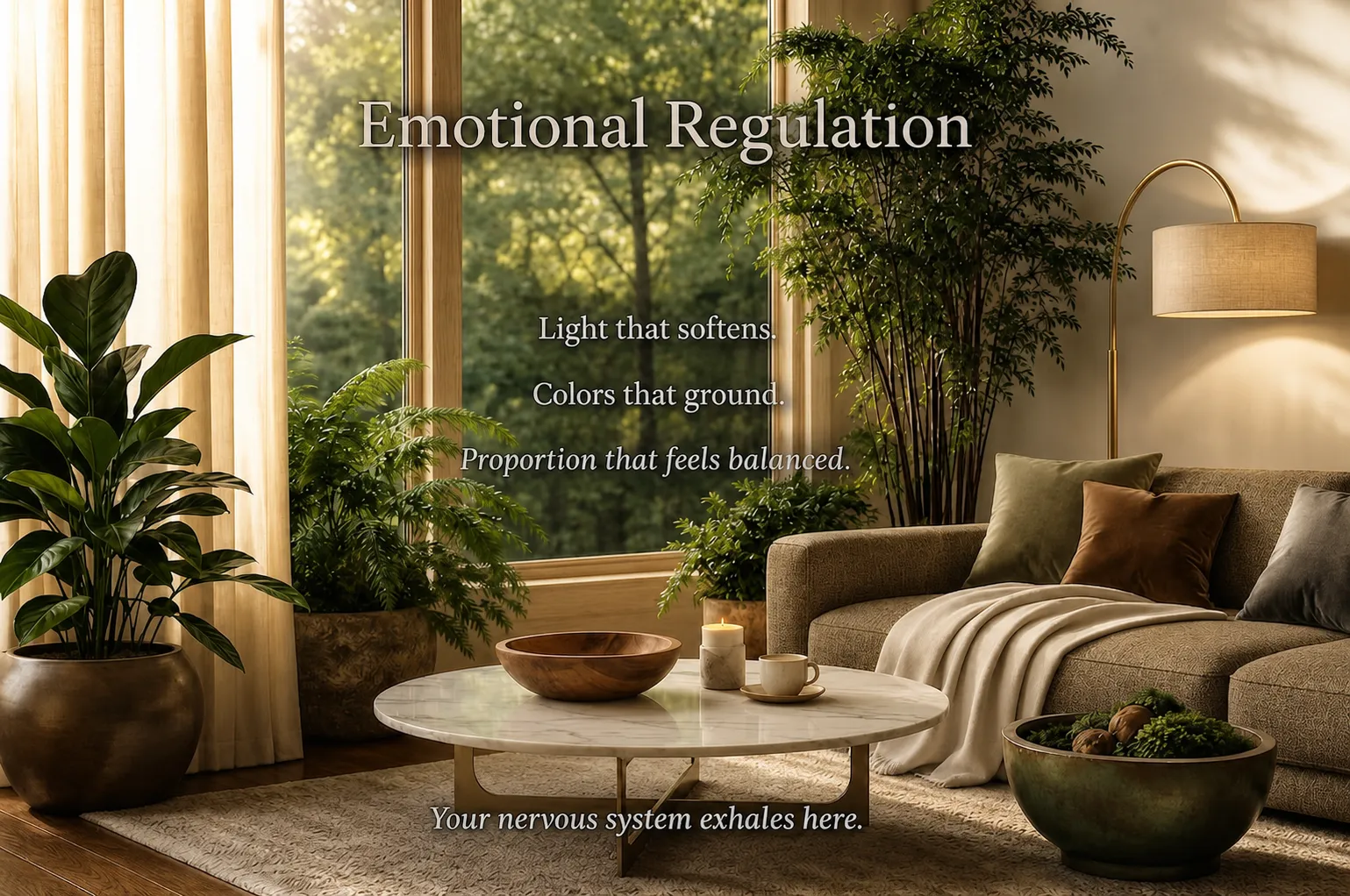
Natural environments provide a form of stimulation the brain processes efficiently — visually rich but not overwhelming, complex but not chaotic, interesting but not demanding. This effortless quality allows the nervous system to relax while remaining gently engaged. Contrast that with many modern built environments: screens, artificial lighting, visual clutter, competing notifications, hard surfaces, synthetic materials. These elements continuously demand attention. Nature rarely does.
How to Bring Biophilic Design Into Your Home
Stephen Kellert, one of the primary architects of biophilic design theory, identified 14 patterns of biophilic design that span from direct nature contact (plants, water, natural light) to indirect nature contact (natural materials, organic forms, nature-inspired colors) to spatial configurations that mimic the qualities of natural settings. For most homes, the most accessible entry points are:
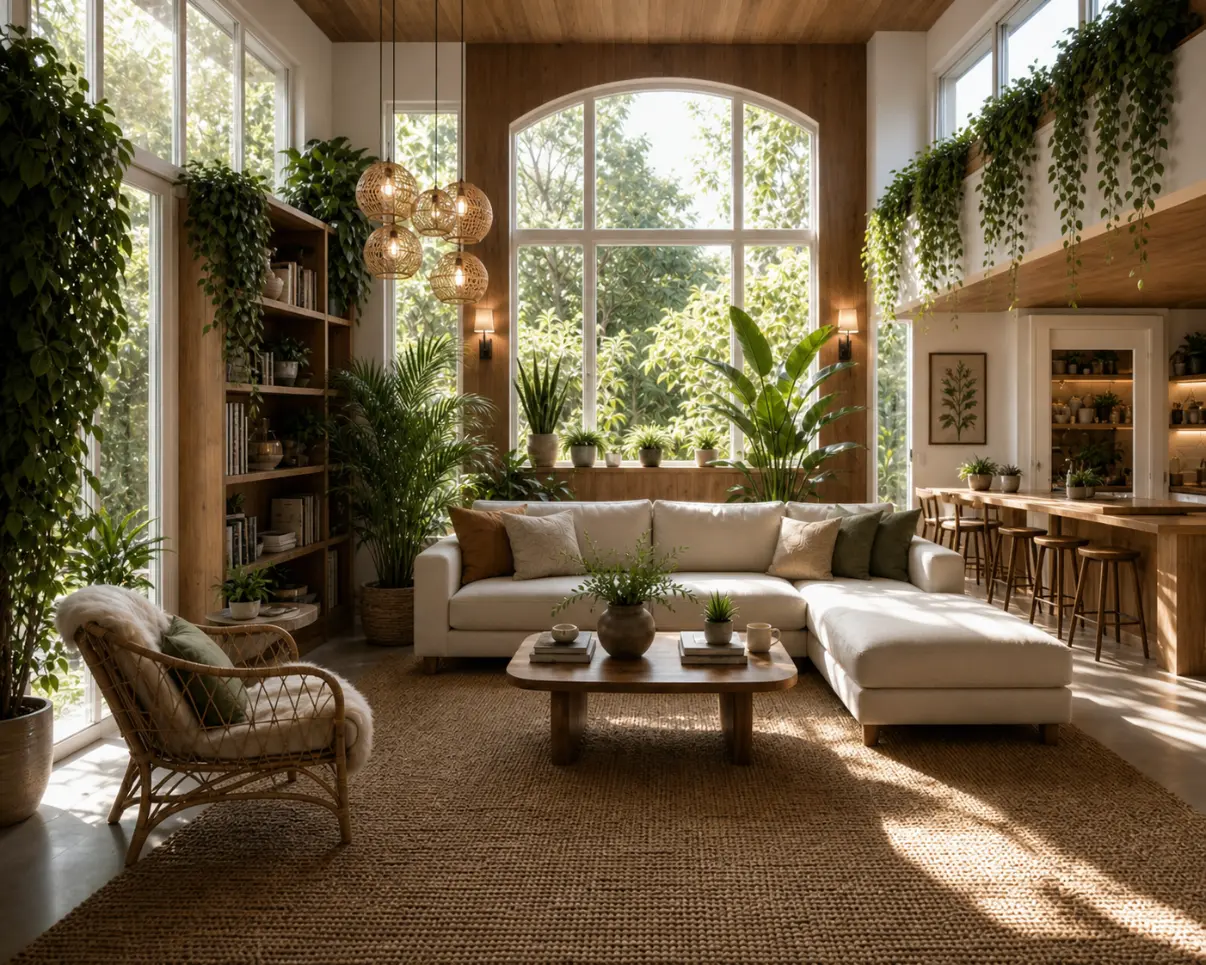
Natural light — daylight plays a critical role in regulating biological rhythms and supporting mental wellbeing. It is also the most fundamental biophilic element available in any space.
Indoor plants — introduce living elements that create a direct visual and psychological connection to the natural world. Research consistently shows that even a single plant in a room measurably improves mood and reduces psychological stress.
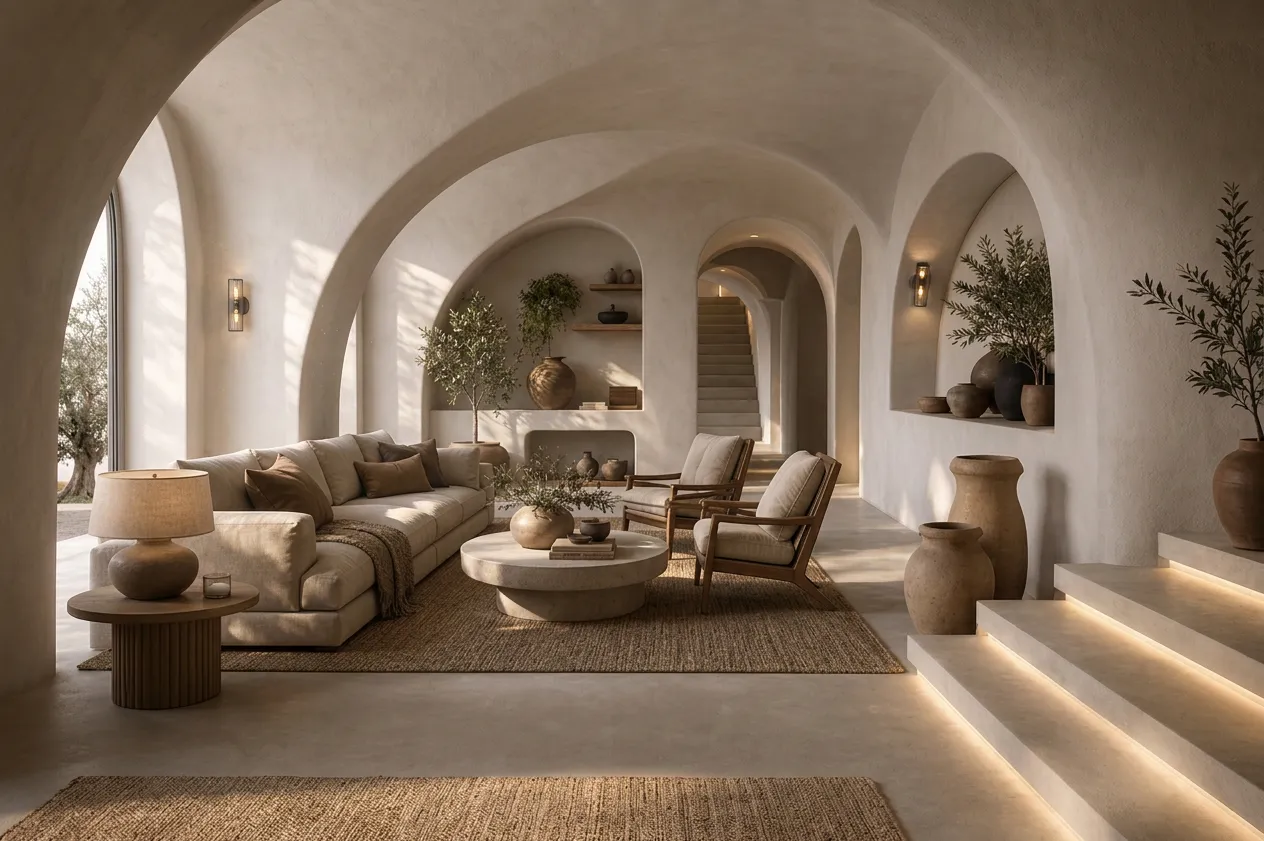
Natural materials — wood, stone, clay, linen, cotton, and wool feel warmer and more authentic because they reflect the textures and irregular patterns found in nature. The brain recognizes these materials as familiar at a deep level.
Views to the outdoors — windows framing trees, gardens, landscapes, or even sky maintain a visual connection to the natural world throughout the day. Roger Ulrich's landmark research showed that even a window view of trees measurably improved recovery outcomes in hospital patients.
Organic shapes and forms — curves, flowing forms, and irregular patterns feel more comfortable than rigid geometric repetition because they mirror the visual language of natural environments.
Why Does the Brain Respond So Positively to Natural Patterns?
Look closely at the branching structure of a tree. Notice the irregular, self-similar geometry of a fern. Observe how a river meanders. Natural environments contain fractal patterns — self-similar structures that repeat at different scales — and the brain responds to them with measurable ease. Researchers have found that human beings show consistent positive physiological responses to natural fractal patterns, including reduced stress markers and increased feelings of calm and wellbeing.
These patterns are deeply familiar to our visual systems because they have surrounded us throughout our evolutionary history. A home that incorporates them — through natural materials, plants, uneven textures, and organic forms — is working with the brain's deepest preferences rather than against them.
Is Biophilic Design Just a Trend? The Research Says No
Some design trends come and go with the speed of social media. Biophilic design is different — not because it is more elegant or better marketed, but because it is grounded in human biology rather than aesthetic fashion. The International WELL Building Standard, a globally recognized framework for buildings that support human health, incorporates biophilic design as one of its core evidence-based health interventions. Healthcare systems, corporate campuses, schools, and urban planners are applying it because the research outcomes are consistent: spaces with biophilic elements produce measurable improvements in stress, recovery, focus, and wellbeing. A trend is temporary. A biological need is timeless.
"The goal is not to make your home look like a forest. The goal is to make it feel more human."
Frequently asked questions
What is biophilic design?
Biophilic design is an approach to architecture and interior design that integrates natural elements — plants, daylight, natural materials, outdoor views, water, and organic forms — into built spaces to support human health and wellbeing. Based on E.O. Wilson's biophilia hypothesis holds that humans have an innate biological affinity for nature, shaped by evolutionary history, and that built environments incorporating natural elements activate measurable psychological and physiological benefits.
What are examples of biophilic design in a home?
Common biophilic design elements in a home include: indoor plants and living walls; natural materials such as wood flooring, stone counters, linen textiles, and clay or ceramic vessels; maximized access to natural light and views of trees, gardens, or sky; water features such as small indoor fountains; organic architectural forms like curved walls, arched doorways, and irregular textures; and nature-inspired color palettes drawn from earth, stone, and plant tones.
Does biophilic design actually reduce stress?
Yes — the evidence is robust. Multiple studies in environmental psychology have documented that exposure to natural elements, views of nature, and nature-integrated spaces reduces cortisol levels, lowers heart rate, decreases muscle tension, and improves psychological wellbeing. Roger Ulrich's foundational research found that hospital patients with window views of trees recovered measurably faster than those without. The WELL Building Standard, based on extensive evidence review, includes biophilic design as a recognized health intervention.
How can I add biophilic design to my home on a budget?
Biophilic design does not require renovation or significant investment. The most accessible entry points: add one or several houseplants to frequently occupied rooms; replace synthetic textiles with natural-fiber alternatives (linen, cotton, wool); unblock or maximize window access to natural light and outdoor views; introduce wooden, stone, or ceramic elements into your décor; and choose a color palette inspired by natural tones — earth, clay, sage, stone — over purely synthetic color choices.
What are the health benefits of biophilic design?
Research-documented benefits of biophilic design include: reduced physiological stress markers including cortisol and heart rate; faster recovery from stress and illness; improved concentration and cognitive performance; better sleep quality through increased natural light exposure; improved mood and reduced symptoms of anxiety and depression; and enhanced sense of connection and emotional wellbeing. The WELL Building Standard recognizes biophilic design as a measurable health intervention applicable across residential, commercial, and healthcare settings.