How to Design a Home for Mental Wellness: Six Principles from Neuroarchitecture

What if your home could actively help you recover from stress, sleep more deeply, and think more clearly? Emerging research in neuroarchitecture and environmental psychology suggests it can — when you design with intention rather than aesthetics alone.
What is restorative home design? A restorative home is one designed not just for beauty or function, but to actively support the brain's recovery from stress, cognitive fatigue, and nervous system overload. Drawing on the field of neuroarchitecture — the study of how the built environment affects the human brain — restorative design treats your home as a tool for mental wellness, not simply a backdrop to daily life.
See how Soma Atelier designs for mental wellness and recovery
Throughout this series we have explored the individual building blocks of a brain-supportive home: color, natural light, cognitive load, biophilic design, and architectural form. This article brings them together — six principles, one framework, and the practical question of what a restorative home actually looks like in practice.
"A healthy home doesn't require perfection. It requires intention — every element working with your brain instead of against it."
What Does Research Say About Homes and Mental Wellness?
Two research frameworks form the scientific foundation of what we now understand about restorative environments.
Psychologists Rachel and Stephen Kaplan developed Attention Restoration Theory (ART) — the finding that carefully designed environments allow the brain to recover from directed attention fatigue, the cognitive exhaustion that accumulates from sustained concentration and decision-making. Their research identified four qualities that make environments genuinely restorative: a sense of being away from everyday demands, a feeling of extent (the space feels like a coherent world of its own), fascination (the environment engages effortlessly without demanding focused effort), and compatibility with your purpose and needs.
Environmental psychologist Roger Ulrich's Stress Recovery Theory (SRT) adds a physiological dimension — demonstrating that certain environmental features, particularly nature-adjacent elements, trigger measurable recovery from stress: reduced cortisol, lowered heart rate, decreased muscle tension. These are not subjective impressions. They are measurable biological events that the environment either supports or prevents.
Neither framework requires a complete redesign. Both suggest that intentional, targeted changes to existing spaces can meaningfully shift how the nervous system experiences being in them.
How Do You Design a Room for Mental Wellness?
One of the most common design mistakes is treating every room identically. Every room has a job — and the design should serve that job at a neurological level, not just an aesthetic one.
A bedroom should support rest. A home office should support focus. A living room should support connection. A wellness space should support recovery. Before selecting colors, furniture, or finishes, ask: how do I want people to feel in this room? The answer should guide every decision that follows — not the other way around.
[Interactive — Wellness room builder: Six toggle switches — one for each design principle from the series — allow readers to layer all elements onto a single room. The wellness score climbs from 0 to 96 as principles accumulate. Stages: No principles active → A foundation forming → Building momentum → A balanced environment → Highly restorative → Exceptional wellness design → Fully integrated wellness home. Four live metrics: Stress recovery, Cognitive ease, Nervous system calm, Restorative quality.]
The Six Principles of Mental Wellness Home Design
1. Reduce cognitive load Every room should feel intentional. Clear focal points, thoughtful storage, and generous negative space allow the brain to relax its constant environmental scanning. Visual busyness is a silent tax on mental energy — a room packed with competing elements keeps the nervous system engaged when it should be at ease.
2. Use color with purpose Choose colors based on the emotional function of the room, not trends. Bedrooms benefit from blues and muted greens that signal calm. A home office may support focus through warm neutrals. A gathering space can carry the warmth of terracotta or amber. Let the desired feeling guide the palette — not the trend cycle.
3. Prioritize natural light Light regulates human biology more profoundly than any other design element. Maximize daylight, keep windows unobstructed, and align daily routines with natural light cycles. Morning light in particular anchors the body's circadian rhythm — the biological clock that governs sleep, mood, energy, and cognitive performance — setting the tone for the entire day.
4. Bring nature inside Plants, natural materials, organic textures, and views to the outdoors reconnect the nervous system to the environments it evolved alongside. Even modest biophilic additions — a plant, a linen textile, an unobstructed window view of a tree or sky — measurably shift the restorative quality of a space.
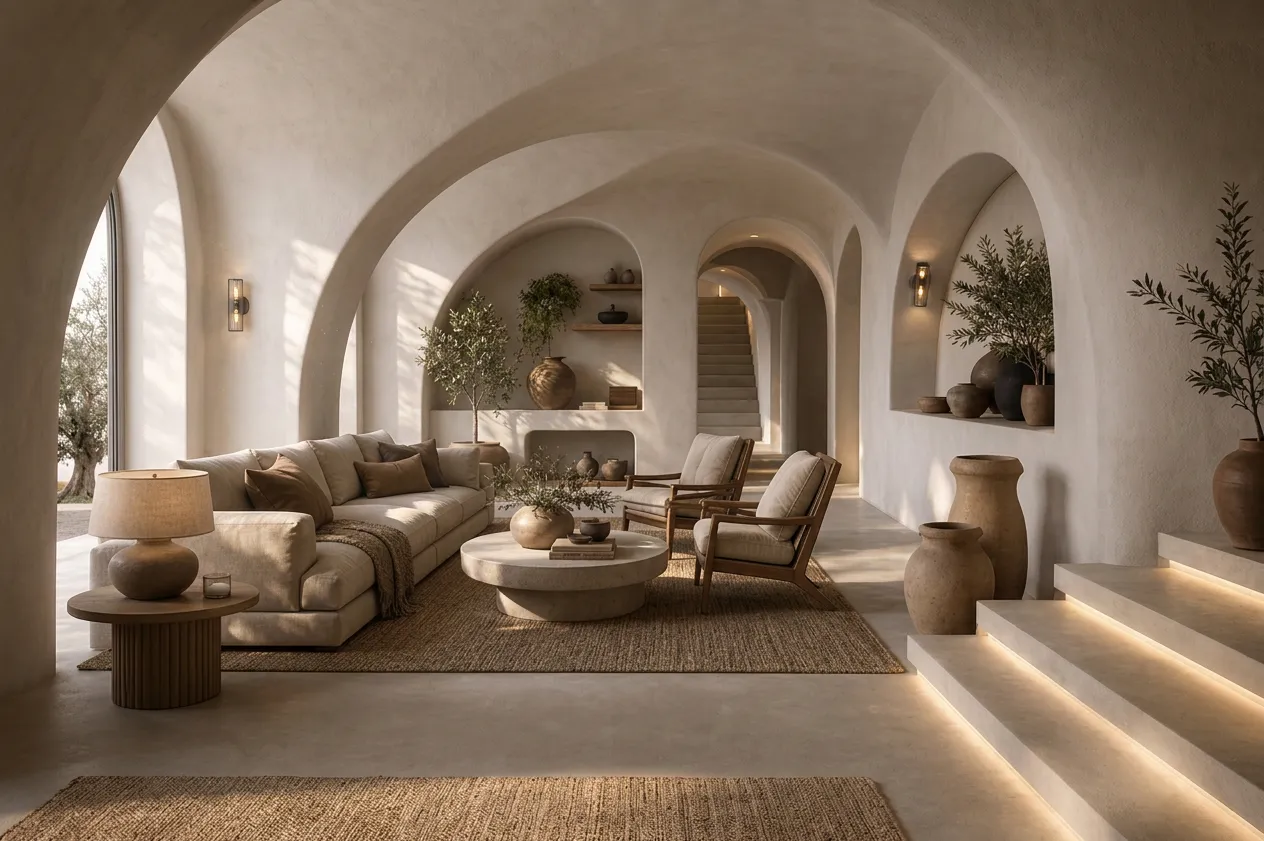
5. Soften with curves Rounded furniture, arched details, and organic forms reduce subconscious threat signals and make a space feel more welcoming and human-centered. In a fully rectilinear room, a single curved sofa or rounded mirror can shift the emotional register of the entire space — because the brain responds to visual softness before we consciously notice it.
6. Design for recovery This is the principle most absent from conventional home design. Every home needs spaces that offer genuine restoration — environments where the brain can fully disengage, the nervous system can down-regulate, and the person can simply be. Recovery is not passive. It requires an environment specifically designed to support it.
What Does Designing for Recovery Actually Mean?
Modern life is demanding. Most people spend their days navigating notifications, solving problems, managing responsibilities, and processing relentless stimulation. A home that doesn't offer genuine recovery spaces doesn't just fail to help — it adds to the load.
The Kaplans' Attention Restoration Theory gives us a useful lens here: a recovery space should feel away (separated from the pressure of daily demands), have extent (enough visual and spatial coherence to feel like its own world), offer fascination (gentle, effortless engagement — a plant, a view, a candle, rather than a screen), and feel compatible with resting (not designed for productivity or performance).
Recovery spaces don't require a dedicated room or significant renovation. They require intention. They might look like:
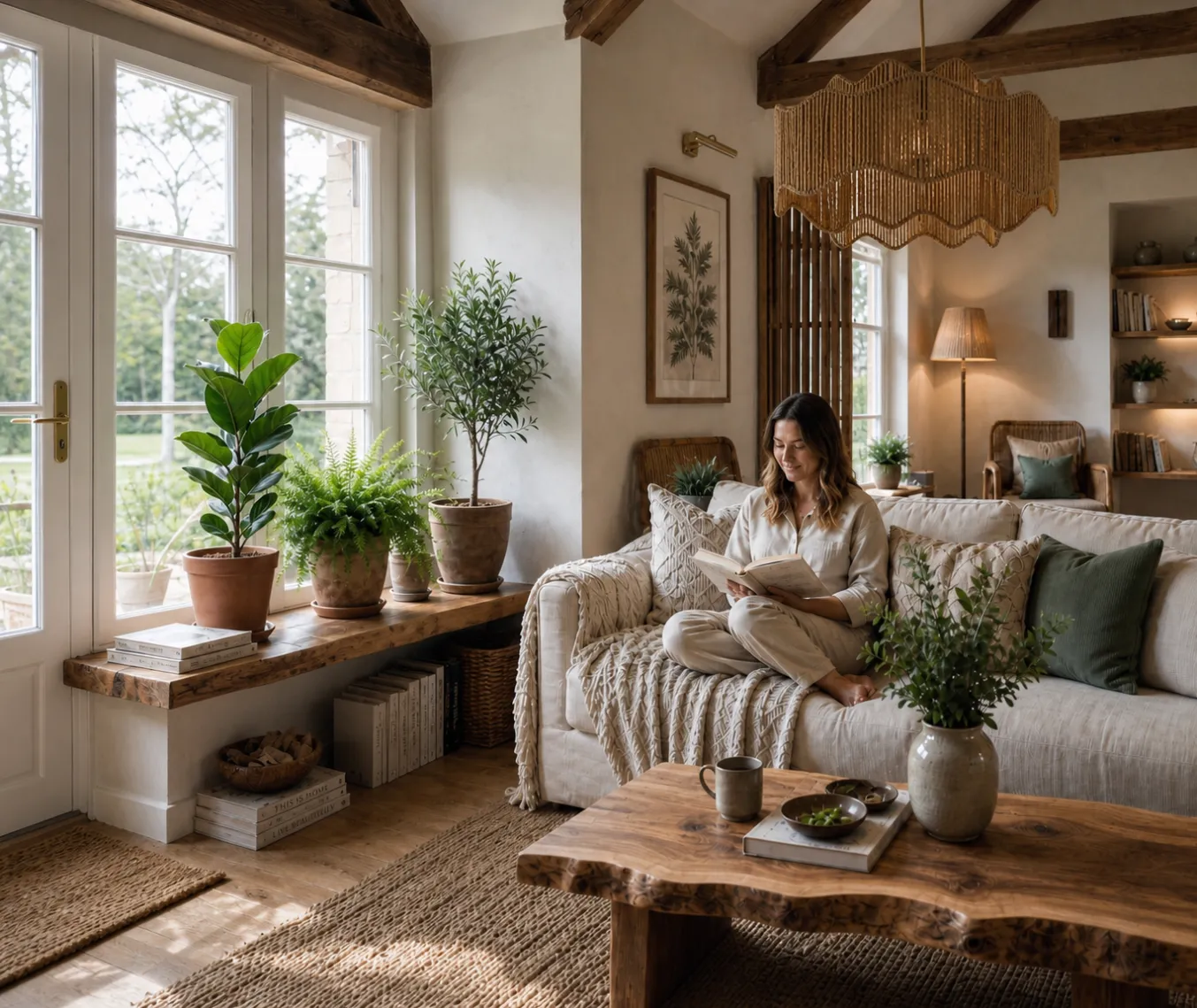
- A reading corner with good natural light, a comfortable chair, and one well-placed plant
- A meditation area with minimal visual activity, natural materials, and soft, diffused light
- A bedroom designed first for sleep — with controlled evening lighting, breathable natural textiles, and a deliberate absence of screens and work materials
- An outdoor retreat — even a small balcony or garden corner — that provides access to air, daylight, and living elements
- A quiet sitting space intentionally free of notifications, separated from the home's most active areas
What these spaces share is not size, budget, or style. They share design intent: they exist to restore the person inside them, not to impress anyone outside.
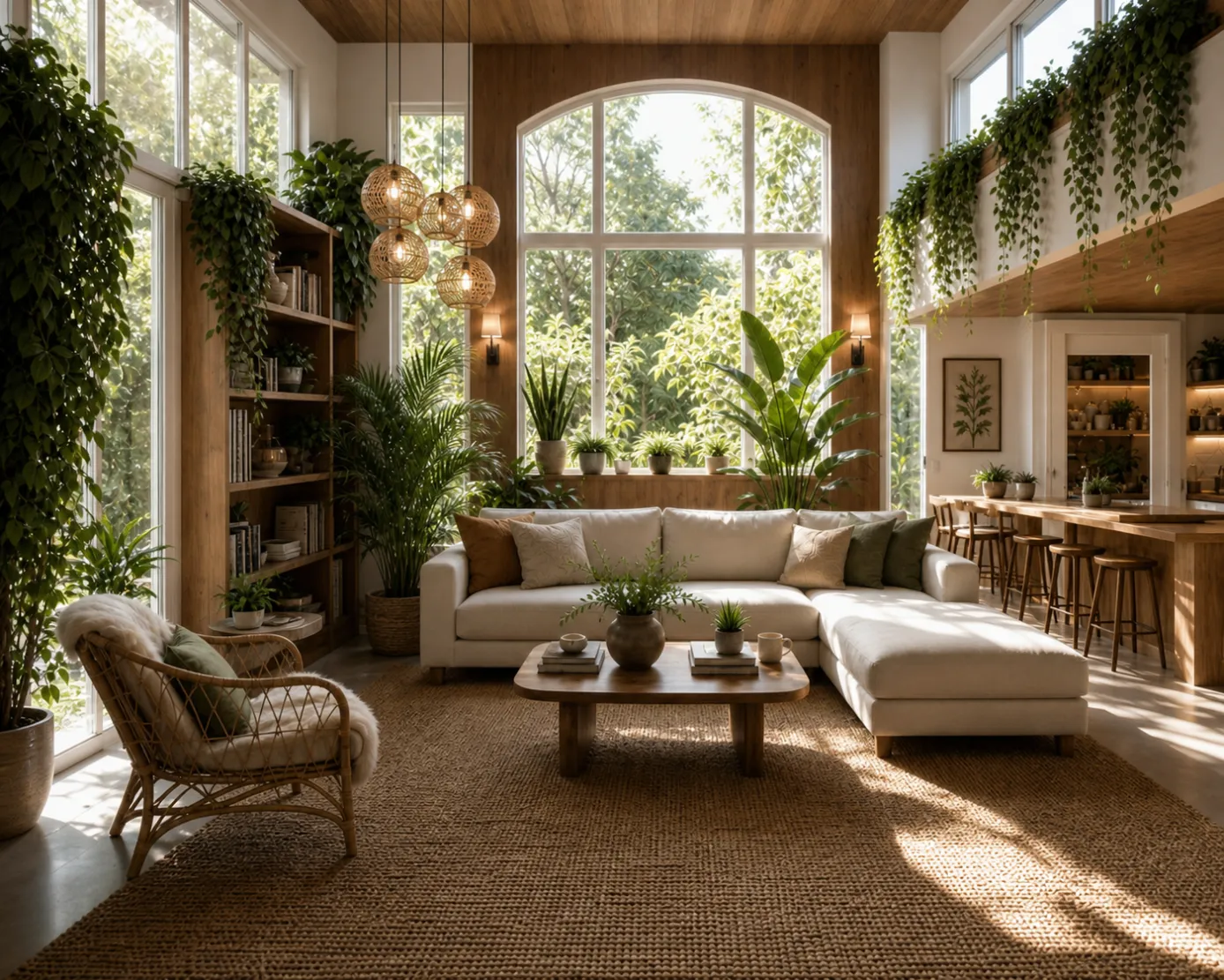
"Your home is one of the most influential environments in your life. Design it accordingly."
Frequently asked questions
What is restorative home design and how is it different from regular interior design?
Restorative home design applies principles from neuroarchitecture and environmental psychology to create spaces that actively support mental wellness — not just visual appeal. Where conventional design focuses on aesthetics and function, restorative design treats the brain and nervous system as the primary stakeholders in every spatial decision. The goal is a home that doesn't just look good but actively helps the people inside it recover, focus, and feel well.
How can I design my home to support mental health?
Start by identifying the purpose of each room and how you want to feel in it. Then apply the six neuroarchitecture principles: reduce visual clutter, choose color by emotional function, maximize natural light, add biophilic elements, soften the space with organic forms and curves, and create at least one dedicated recovery space. Changes in any of these areas — even small ones — shift how a space registers to the nervous system over time.
What is a recovery space in home design?
A recovery space is any area in your home designed specifically to allow the brain and nervous system to disengage and restore. Based on Attention Restoration Theory, effective recovery spaces create a feeling of being away from daily demands, have visual coherence and calm, offer gentle effortless engagement (plants, natural light, soft textures), and align with the purpose of rest. A reading corner, a quiet chair near a window, or a screen-free nook with natural materials can all serve this function.
What is Attention Restoration Theory and how does it apply to home design?
Attention Restoration Theory, developed by psychologists Rachel and Stephen Kaplan, identifies four qualities that make environments genuinely restorative: being away (a psychological sense of distance from everyday demands), extent (the space feels coherent and immersive), fascination (effortless sensory engagement), and compatibility (the space fits your purpose). Applied to home design, these translate into calmer spaces with natural elements, reduced visual complexity, and intentional separation between active and restorative areas.
How does neuroarchitecture help with mental wellness at home?
Neuroarchitecture provides a research-backed framework for understanding how spatial decisions — lighting, color, form, material, layout — affect the brain and nervous system. Applied to home design, it shifts decisions from "does this look good?" to "does this support the people living here?" The six principles covered in this series represent the most accessible and impactful entry points for most homes, applicable at any budget and any stage of a project.