How Natural Light Affects Your Mental Health: A Guide to Designing Your Home Around Daylight

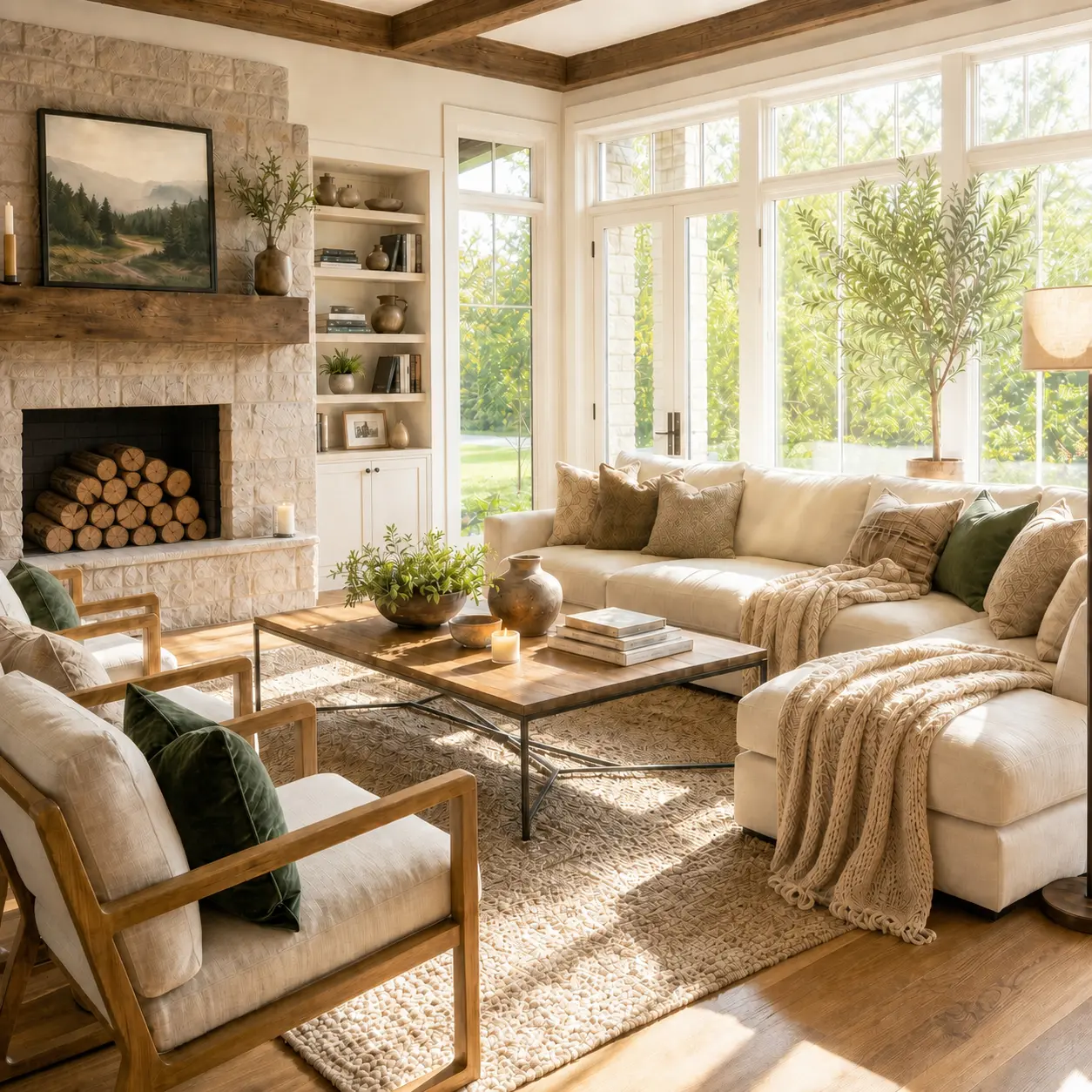
Imagine spending all day in a beautifully designed home — perfect furniture, calming colors, stunning finishes — but without natural light. The space would photograph beautifully. But the people living inside would feel the absence in ways they might not be able to name.
What is daylighting in home design? Daylighting is the intentional design of spaces to maximize natural light access. Beyond illumination, it recognizes that daylight is biological information — the primary signal that synchronizes the body's circadian rhythm, the internal clock governing sleep, wakefulness, mood, hormone production, and cognitive performance. Designing for daylight is, at its core, designing for human biology.
See how Soma Atelier designs for natural light and circadian health
"Artificial lighting can illuminate a room. Natural light can transform it — and the person living inside it."
How Does Natural Light Affect Your Brain and Body?
Inside your brain is a biological timing system called the circadian rhythm — your body's master clock, located in a region of the hypothalamus called the suprachiasmatic nucleus (SCN). This system regulates sleep, wakefulness, hormone production, energy levels, mood, and cognitive performance across a 24-hour cycle. And one of the primary signals that sets and synchronizes this clock is light.
Research from Charles Czeisler at Harvard Medical School has demonstrated that light exposure — particularly the intensity, spectrum, and timing of that exposure — is the most powerful external regulator of the human circadian system. When natural light enters the eyes at the right times, it sends information directly to the SCN, helping keep the body's biological processes synchronized with the environment. When it doesn't, those processes begin to drift.
Why Does Morning Light Matter Most for Sleep and Mood?
Morning sunlight helps synchronize the body's internal clock by triggering the release of cortisol — a hormone that promotes alertness and readiness — at the appropriate time in the biological cycle. Exposure to natural light early in the day also suppresses melatonin (the sleep hormone) during waking hours, so it can rise again naturally in the evening as the body prepares for rest.
Sleep researcher Matthew Walker at the University of California Berkeley has documented how this light-melatonin relationship directly affects sleep quality: when morning light exposure is insufficient, melatonin suppression is incomplete, the body's timing becomes less precise, and the cascade effects — poor sleep, afternoon energy crashes, reduced focus, increased stress — follow predictably. The morning light window is perhaps the most important daily design consideration in a home that is genuinely built for wellbeing.
Why Does Modern Indoor Living Disrupt the Body's Natural Light Cycle?
For most of human history, our ancestors lived and worked outdoors. Their days were governed by the sun — bright, blue-spectrum morning light; the warmth and shift of afternoon; the dimming amber of dusk. Their biology was entrained to this cycle daily, reliably, across thousands of generations.
Today, many people wake under artificial lighting, commute indoors, work under artificial lighting, return home, relax under artificial lighting, then stare at illuminated screens before bed. The light they receive is insufficient in the morning (too dim), wrong in the evening (too blue, too stimulating), and disconnected from natural rhythms entirely.
The clinical endpoint of severe light deprivation is well-documented: Seasonal Affective Disorder (SAD), a form of depression linked to insufficient light exposure during winter months, affects an estimated 10 million Americans annually. But the subtler, sub-clinical effects of chronic light mismatch are far more widespread — and far less recognized as a design problem that homes could help solve.
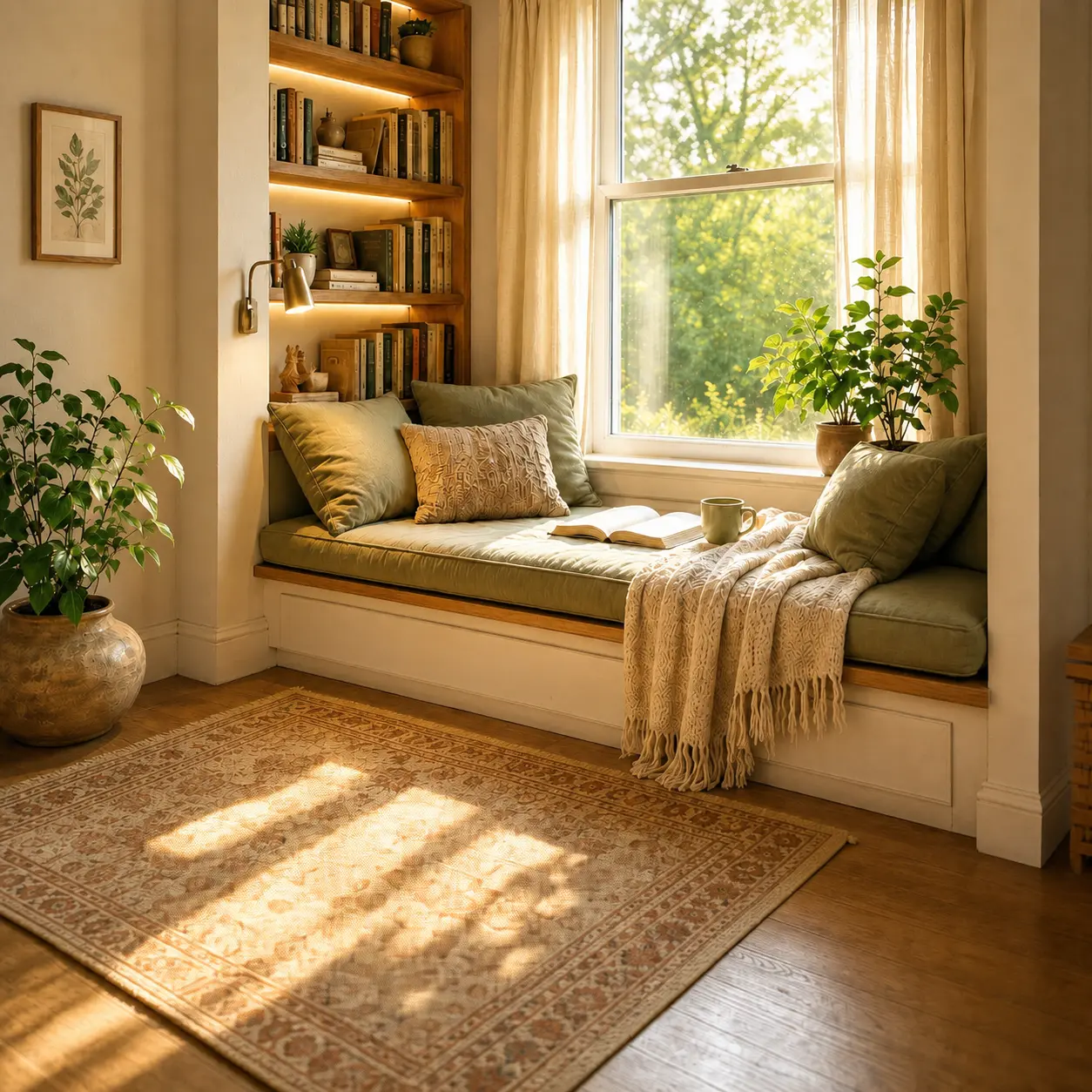
How to Design Your Home Around Natural Light
You don't need floor-to-ceiling glass walls to design meaningfully for daylight. Small, intentional choices create measurable biological benefit:
- Maximize window exposure — avoid blocking windows with oversized furniture or heavy treatments that prevent morning light from reaching the room's living areas
- Use reflective surfaces thoughtfully — light-colored walls, mirrors, and matte-finish reflective materials distribute daylight deeper into a space without creating glare
- Place gathering spots near light — reading chairs, workstations, breakfast tables, and wellness areas benefit most from morning and midday daylight
- Match light to room purpose — daytime activity rooms benefit from abundant natural light; rest and sleep spaces benefit from the ability to control and dim evening light
- Consider window orientation — north-facing rooms receive consistent but cool indirect light; south- and east-facing rooms receive the biologically important morning sun
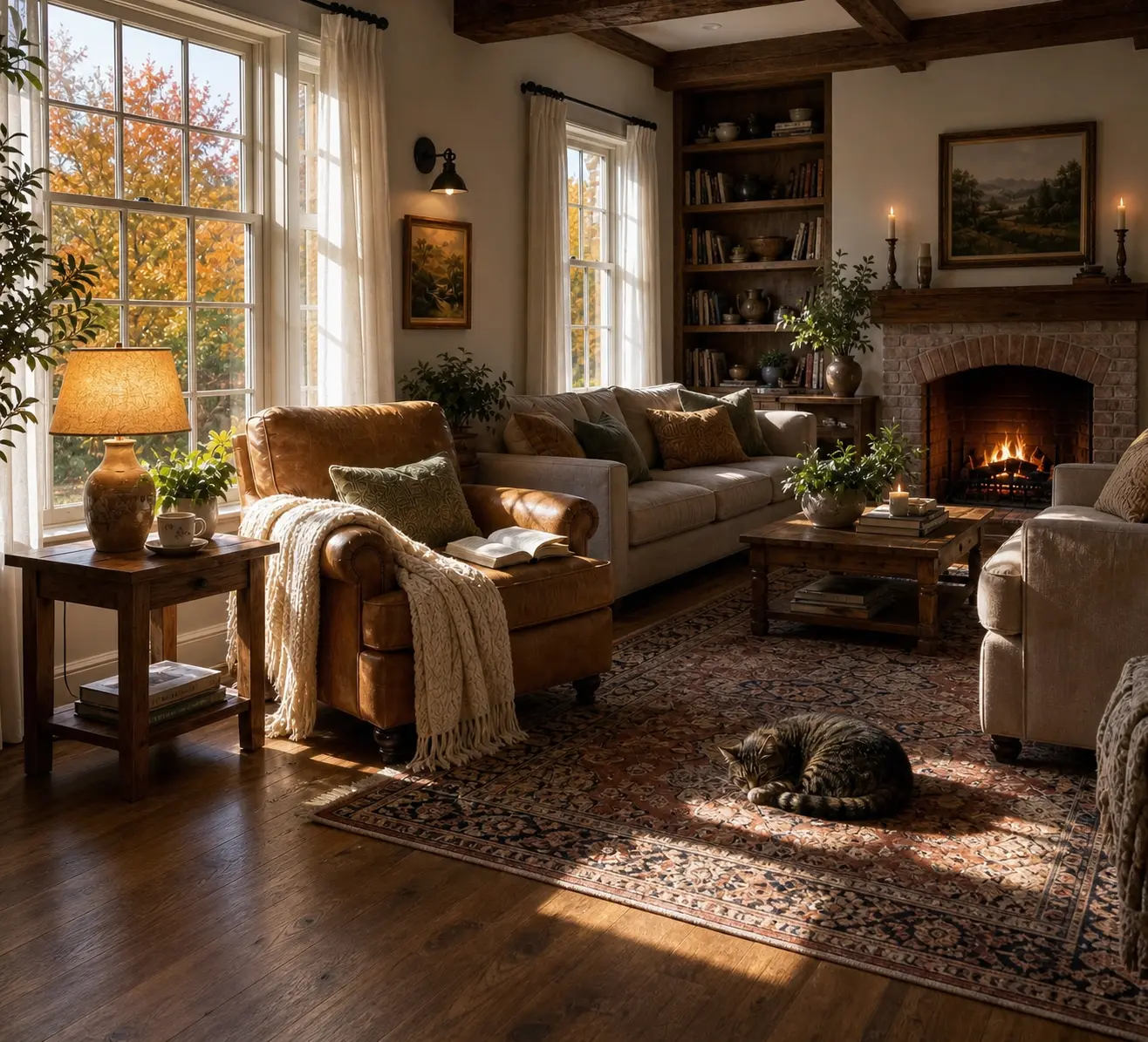
Light is more than illumination. It is information.
Frequently asked questions
How does natural light affect mental health at home?
Natural light regulates the body's circadian rhythm — the biological clock that governs sleep, mood, energy, and hormone production. Adequate morning light exposure supports healthy cortisol patterns, improves alertness, and prepares the body for restful sleep. Insufficient natural light disrupts these rhythms, contributing to poor sleep quality, low mood, reduced cognitive performance, and increased susceptibility to stress. At its most severe, light deprivation causes Seasonal Affective Disorder, a clinically recognized form of depression affecting millions annually.
Why does morning light matter so much for sleep and wellbeing?
Morning light triggers the release of cortisol at the right time in the biological cycle, suppresses residual melatonin, and anchors the body's internal clock to the day's natural rhythm. This synchronization sets the biological tone for the entire day — and, crucially, prepares the body for restful sleep that evening. Sleep researcher Matthew Walker has documented how insufficient morning light exposure disrupts the melatonin cycle, degrading sleep quality in ways that compound over time. Morning light is the single most important daily light exposure for long-term wellbeing.
What is the circadian rhythm and how does daylight affect it?
The circadian rhythm is the body's internal 24-hour biological clock, regulated by a cluster of neurons in the hypothalamus called the suprachiasmatic nucleus (SCN). This system governs sleep and wakefulness, hormone release, body temperature, metabolism, and cognitive performance. Daylight — particularly the blue-spectrum light of morning sun — is the primary signal that synchronizes this clock. When daylight exposure aligns with the natural cycle, biological processes run in coordination. When it doesn't, the effects ripple through sleep, mood, energy, and health.
How can I get more natural light in my home?
The most effective approaches: remove or lighten heavy window treatments that block morning light; position your most-used daytime spaces — desk, breakfast area, reading chair — near windows with strong morning or midday sun exposure; use light, reflective paint colors and strategic mirrors to distribute available daylight deeper into the space; and avoid placing large furniture directly in front of windows. In darker homes, consult a designer about whether adding a skylight, enlarging windows, or replacing internal doors with glazed panels could meaningfully increase daylight penetration.
Is artificial light bad for mental health at home?
Artificial light is not inherently harmful — it becomes problematic when it substitutes for natural light during the day or when it is too bright and blue-spectrum in the evening, when the body needs dimming and warmth to begin preparing for sleep. The solution isn't to avoid artificial light but to use it intentionally: prioritize daylight during active hours, dim and warm artificial light in the evening, and avoid blue-screen light exposure in the hour before bed.